Classical Series Trumpet Mouthpieces
A$50.00
CLASSICAL SERIES
We all deserve a mouthpiece that is designed to work WITH the differences in physiology so that every player can shine as individuals.
The 12 options in the Classical series are designed to work WITH your chops to produce maximum ease, efficiency and to create a traditional but lively and exciting sound in all registers and at all dynamics. Not sure what would work best for you? Reach out to us and we'll help!
Cup Shapes:
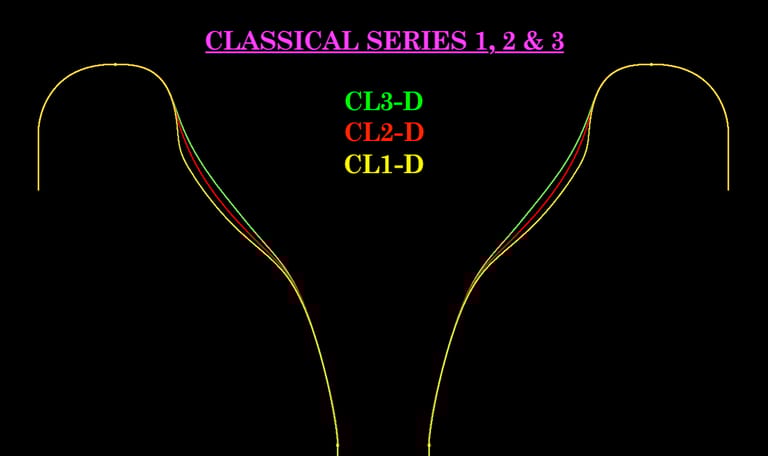
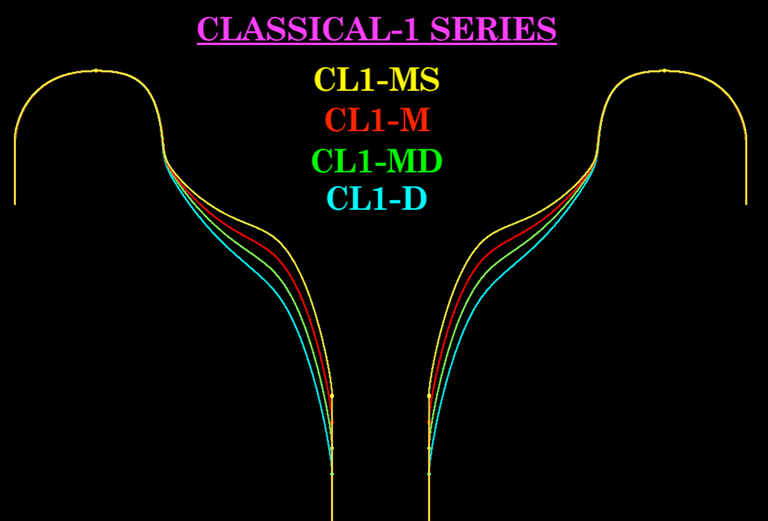
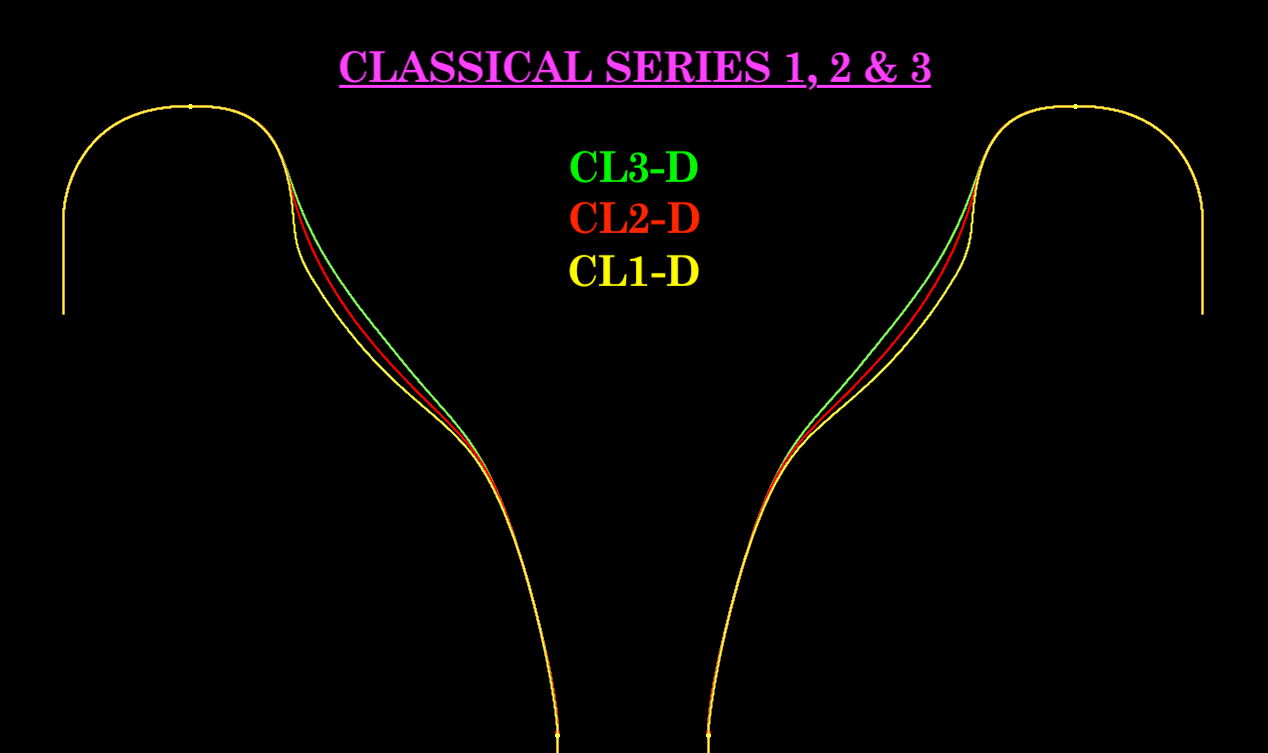
CL1 Cups - Most Lip Room / Most Vertical Cup Wall / Most Lip Room / Least Lip Support
CL2 Cups - Medium
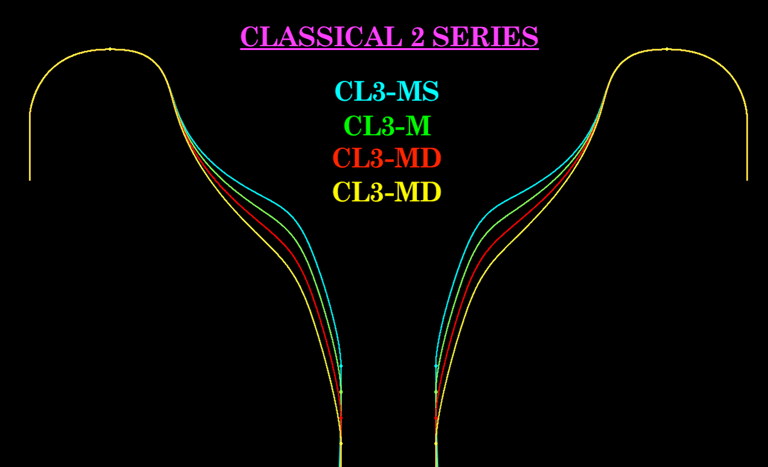
CL3 Cups - Least Lip Room / Most Lip Support
Cup Depths:
MS = Medium Shallow | M = Medium | MD = Medium Deep | D = Deep
Play Testing Advice:
Start with the Medium-Deep cups. Try all three and see which one seems to work better. Then try the Medium and Deep cups from the series you preferred. Pick the depth that gives you a big, easy, exciting sound. If you are happy with your sound but the upper register feels like hard work, try the next series up (i.e. from CL1 to CL2 or CL2 to CL3).
The classical series mouthpieces solve the same essential problem as Commercial Series. They help to make it possible to find the combination between cup entry angle, cup volume and cup depth that is optimal for an individual player and their playing needs.
To achieve this, we started with our standard rim which has very medium characteristics all around, with a medium-round inside edge, a medium-flat contour across the middle of the rim, and a medium-round outside rim shape. Together, along with having a slightly wider rim face than many traditional mouthpiece, these features create a very comfortable mouthpiece that is designed for control, endurance and crisp but not “splatty” articulations.
We utilised a lower cup and throat entrance that produces a clean, crisp front on the note and a sound profile across all dynamics that is clear, exciting, and has an energy and liveliness without developing into a strident or harsh sound at louder dynamics.
We combined these features with three different upper cup shapes that have been designed to work with the different ways and amounts that a players lips may intrude into the cup during playing. A more vertical wall to the upper cup allows for lips that enter the cup when the lips relax in the lower register, and as pressure is applied in the upper register. This makes it easier for the lips to be blown open and to activate the lip tissue on the inside of the lips, which tends to produce a darker sound. While this is wonderful for some players, for others, this will translate to a difficult holding the lips from being blown apart, and can result in issues getting the sound to start at soft dynamics, and the sense that one is really struggling to “hang on” to sound when chasing louder dynamics.
For some players, less lip enters the cup, and the result of this is that the mouthpiece will feel deeper and harder to play than it would for someone whose lips intrude more. Such players need the support of a higher angle to the wall of the upper cup, which helps to support the keep the lips together when playing both softly and loudly.
To put it simply, player A might need lip room, and player B might need lip support in order for both to experience a comparable level of ease. Additionally, Player A will need greater cup volume than player B to produce a comparatively similar dark or bright sound because one player ultimate fills up more of the cup volume with their lips than the other. What ultimately matters is the effective cup volume once the lips are inside the cup.
For this reason, we have created our classical series to offer 3 cup shapes that are tailored to different players’ embouchure (CL1, CL2, & CL3), with each cup shape having four different depths available (D, MD, M, MS).
In terms of diameter, we can make these mouthpieces in any diameter, although most classical players will gravitate towards cups between a 70 and 78 which roughly a Bach 5C and a 1C respectively.
Check out the cup comparsion drawings below to see how this works: