Understanding Our Mouthpieces
Acoustics, physiology and precision machining — matched to how you play.
1. Choose Your Pathway
We offer three main ways to acquire a Phoenix mouthpiece, depending on whether you want complete customization, established standard designs, or separate modular upgrades.
Custom Configurator
Specify exact rim diameters in 0.1mm steps, select custom rim shapes, cup shapes and depths, throat drillings, decoration details, and blank weights.
Explore options →Standard Series
Pre-profiled tops tuned for specific disciplines. Select your rim diameter and immediately choose from Studio, Classical, or Commercial setups.
Explore options →Modular Backbores
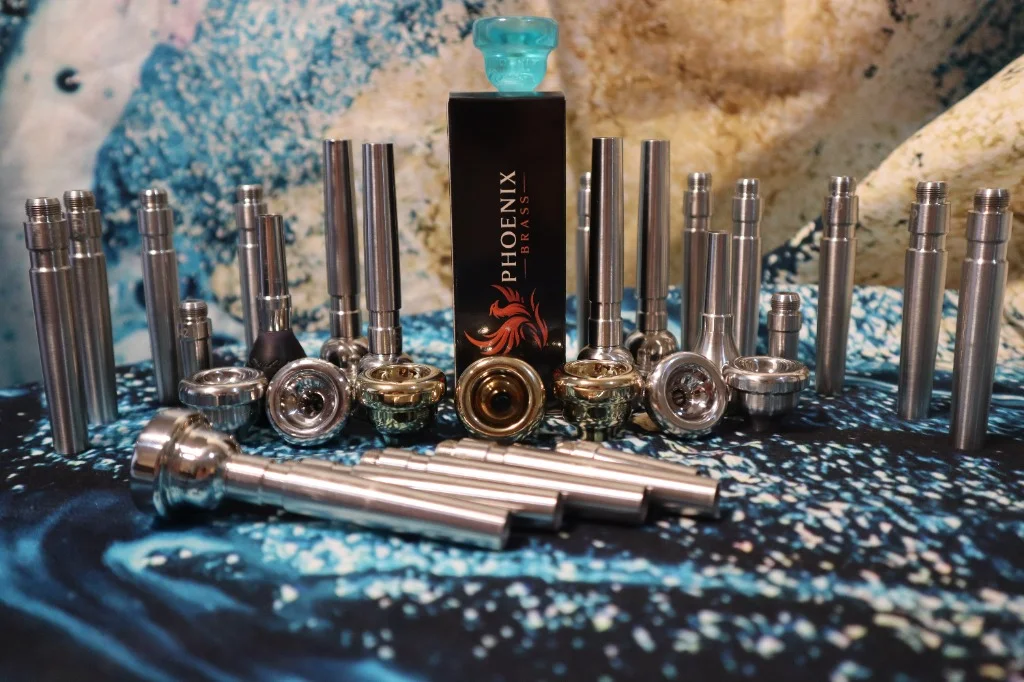
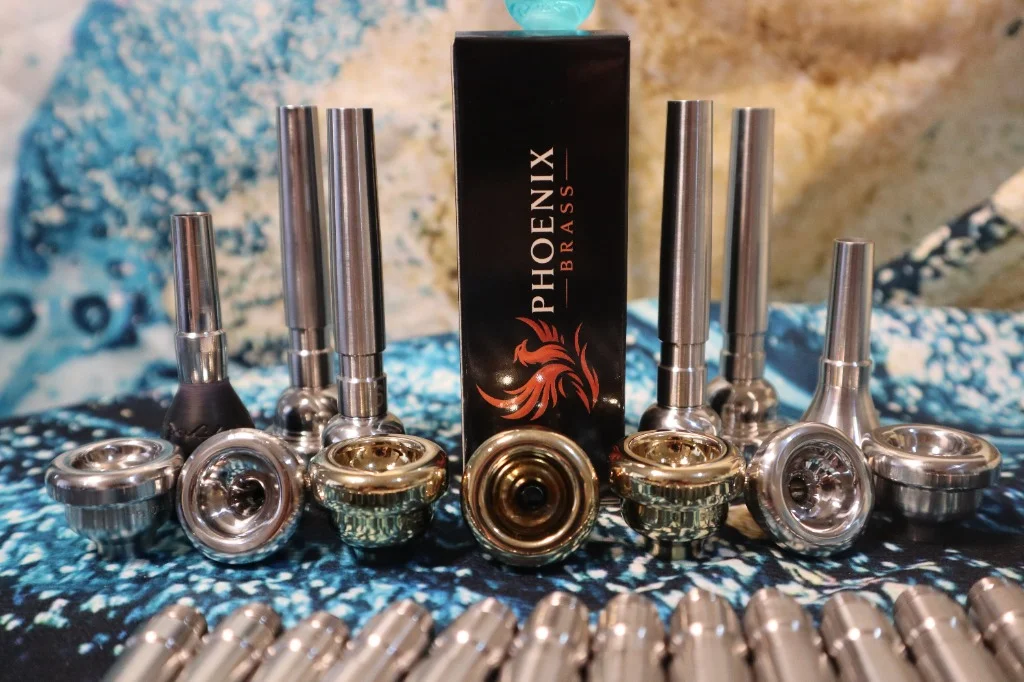
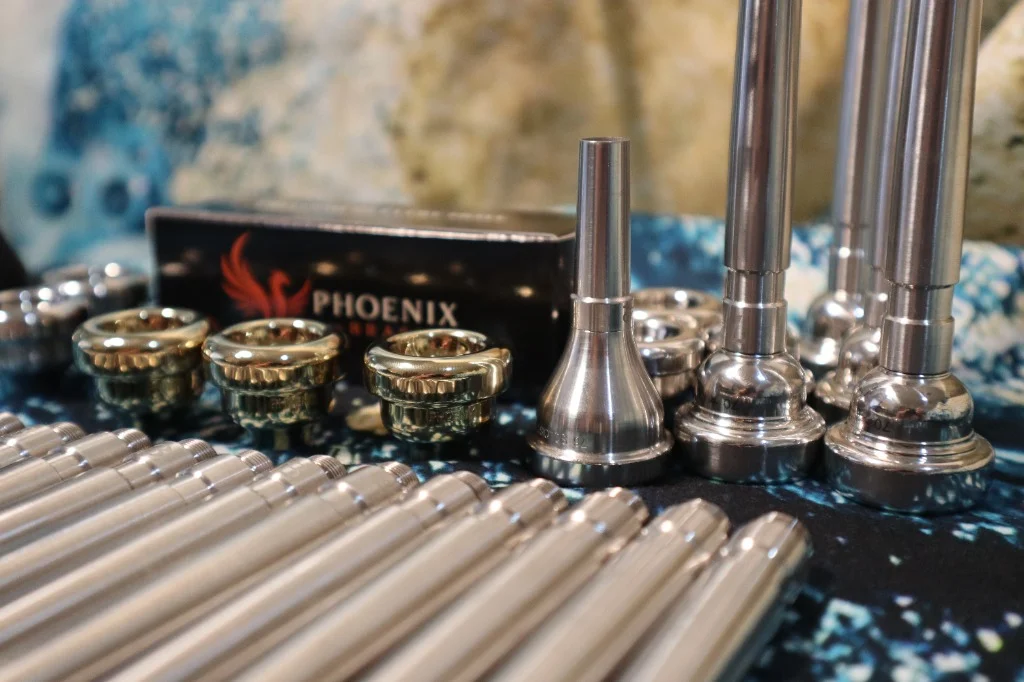
Purchase separate brass, steel, or Resinite shanks threaded to fit standard modular tops using industry-standard Warburton threads (compatible with Warburton, Pickett, AR, Frost, James R New, ACB, and others).
Explore options →Asymmetric Rim Designs
Relief, support and other localized treatments shape the rim differently around its circumference. See the options and how to order them.
More ways to order
Most players should start with a test kit or the mouthpiece configurator. These options suit specific needs:
Asymmetric rim designs
An asymmetric treatment changes the rim in a specific area instead of keeping the same contour all the way around. Depending on the option, one area can move toward or away from the lips, or the opening can shift or change shape. On an otherwise symmetric mouthpiece, rotated versions of the same design are presented as a single choice.
Choose the treatment in the custom mouthpiece configurator, then set your instrument, material, cup and other specifications. Available treatments and any material surcharge are shown in the configurator.



2. Standard Series Profiles
Pre-profiled configurations optimized for specific musical roles and playing styles:
Studio Series
Designed for lead, commercial, and studio recordings. Features shallower, efficient cup depths and standard compression throat shapes to deliver high-velocity core center projection and stable high-register slotting.
Classical Series
Optimized for concert band, symphonic, and orchestral settings. Utilizes deep, classic bowl-cups and open throats to promote a broad, dark, warm sound profile with rich lower-register harmonics.
Commercial Series
Maximum range support. Built with extra-shallow high-compression shapes (like the Z-cup) to maximize lip room and optimize response for high-register endurance and bright projection.
Claude Gordon Legacy
Three predominantly V-shaped profiles inspired by Claude Gordon mouthpiece concepts, from the free-blowing Personal model through to a shallower 3C alternative.
MF Convex Series
Convex V-cup designs inspired by Maynard Ferguson's configurations, offered in shallow, medium, and deep versions to make the concept accessible to more players.
Not sure exactly what you need? Try a test kit to find the setup that suits you.
Browse Test KitsThe 15 Standardized Cup Shapes
We have standardized our mouthpieces into a unified sequence of 15 cup profiles: Cup Families A through J plus our Phoenix Traditional (PT1–PT5) heritage series. Every shape is engineered to deliver a distinct balance of lip intrusion freedom, alpha angle compression, and tonal core.
A · CL1
Classical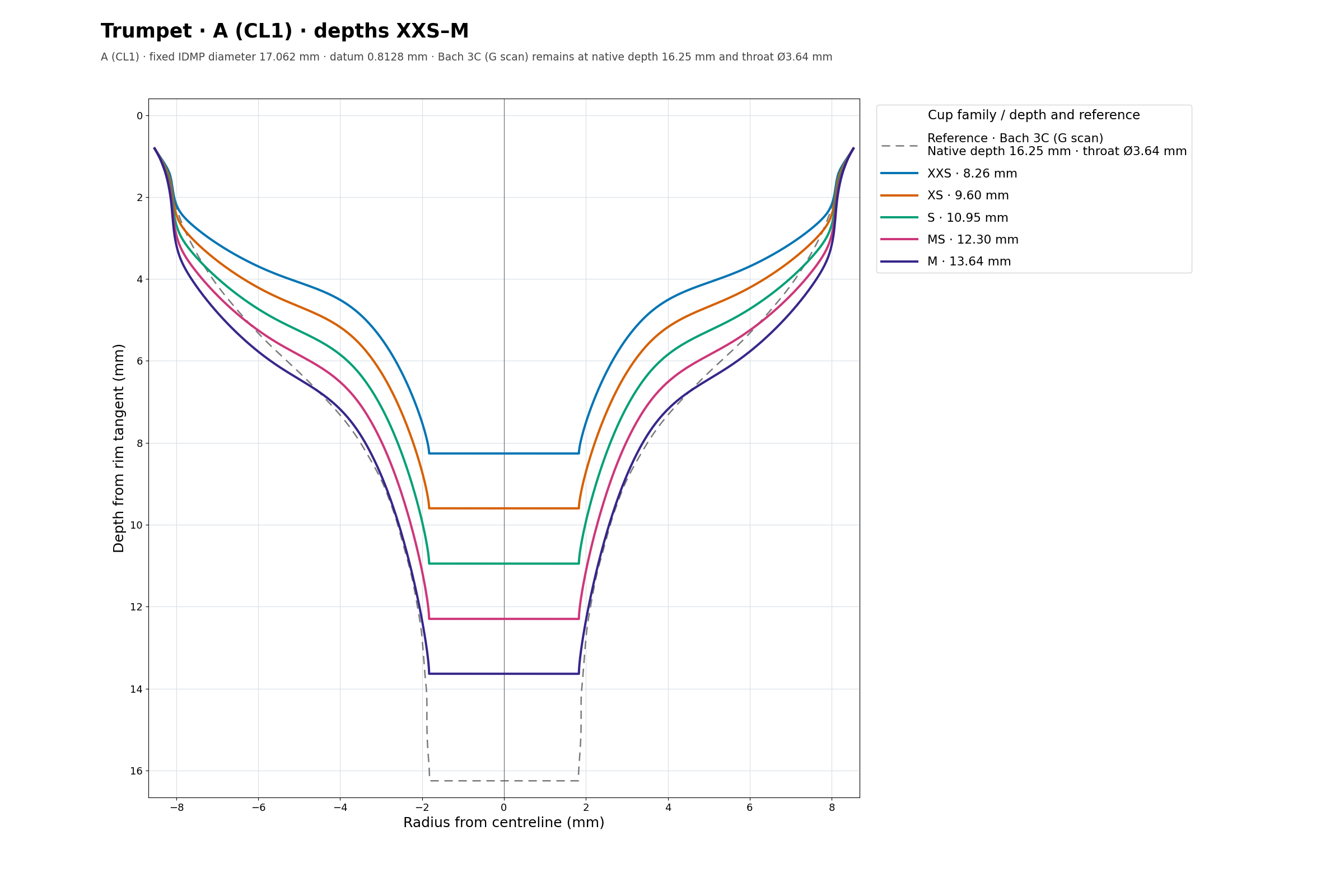
The most vertical upper wall and maximum lip room. Excellent for players who intrude deeply or who have had success with Bach 1C/2C, Pickett BC, or Curry BC cups. Clean, crisp attacks and rich orchestral timbre.
Configure Cup A →B · Star
Commercial Bowl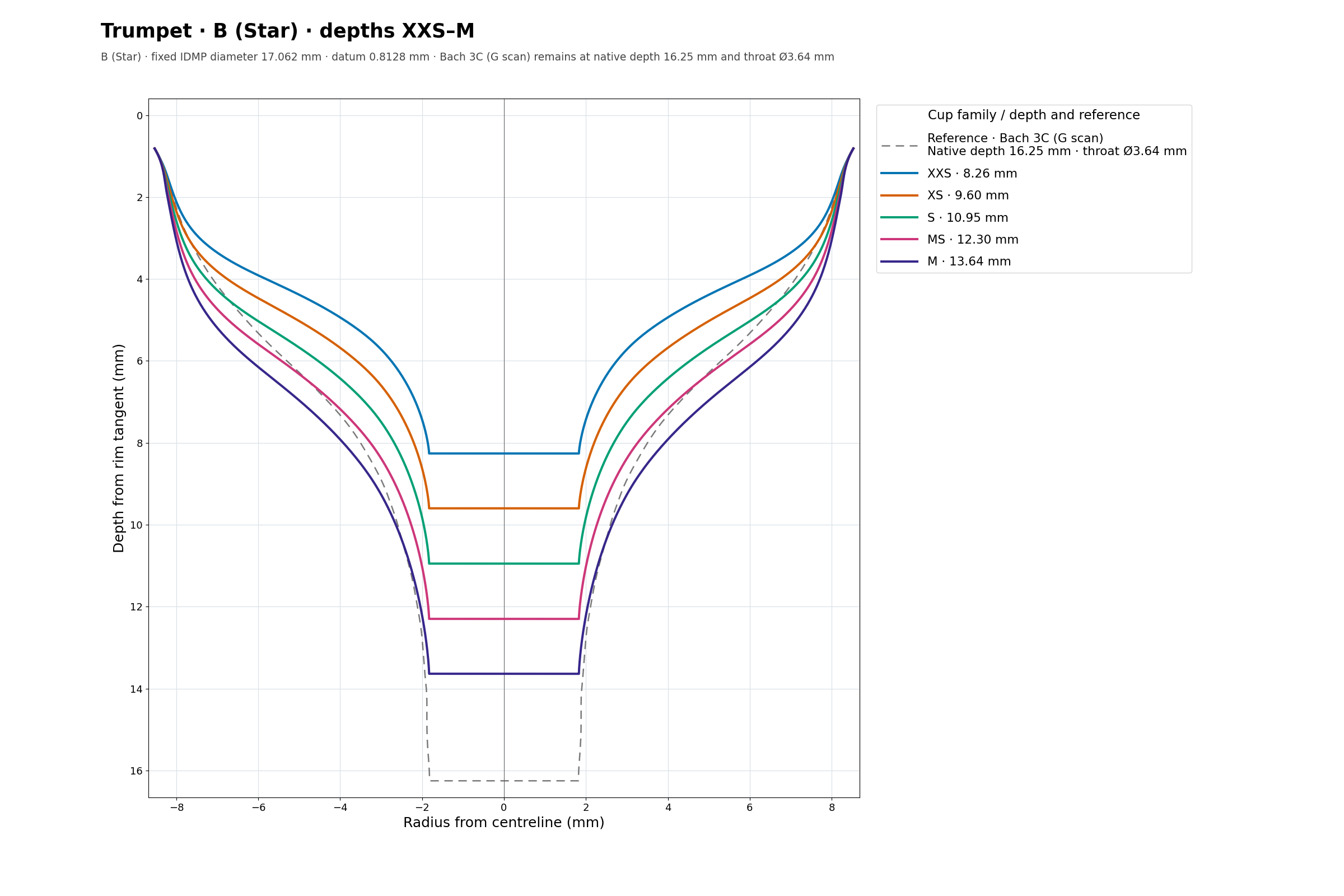
The most bowl-shaped commercial cup with a vertical drop from the rim. Support is provided by the lower cup and tighter throat entrance rather than the upper wall. Designed for orchestral players wanting pops volume and sizzle without altering their chop approach.
Configure Cup B →C · CL2
Classical Standard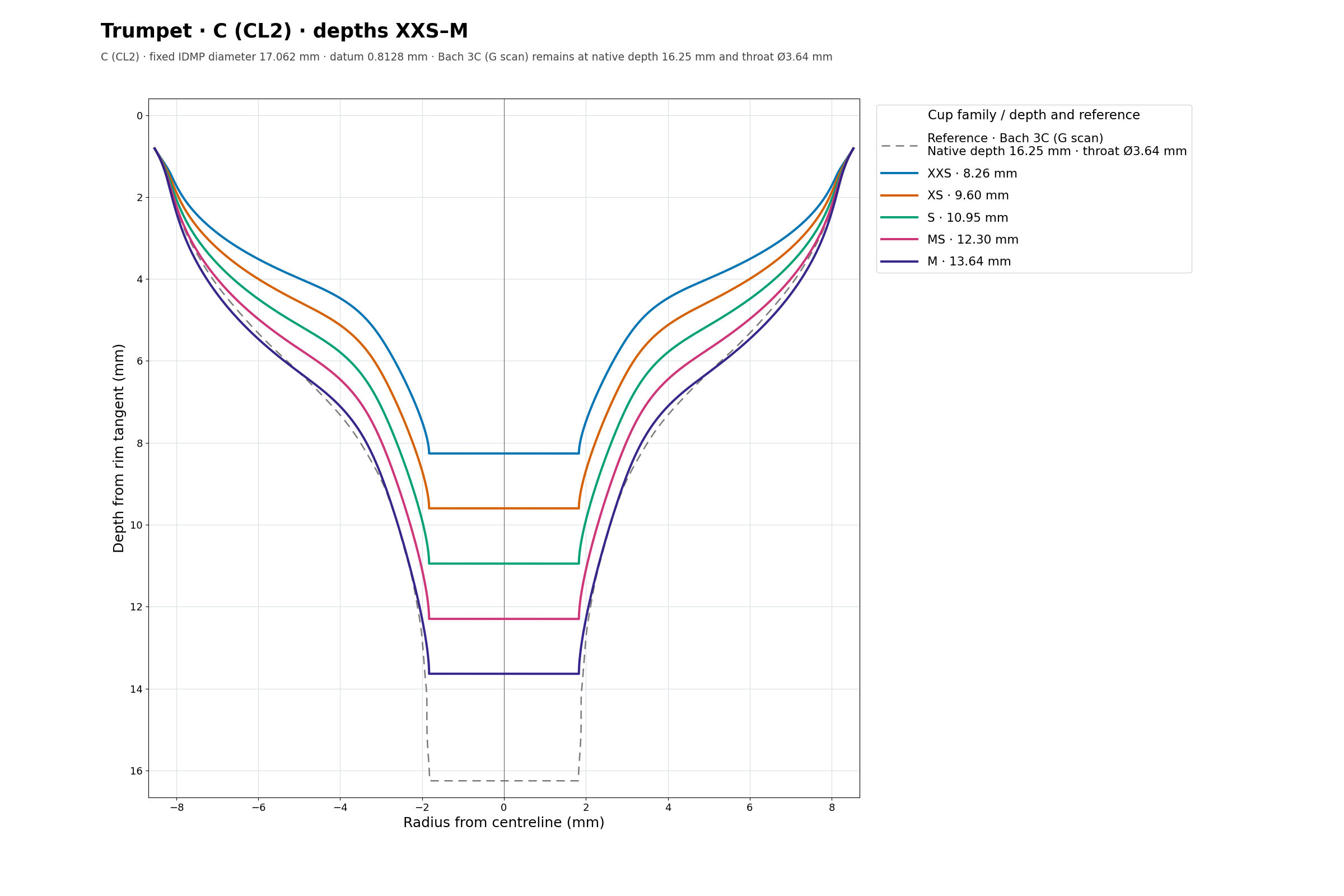
Medium classical shape. Preferred by players comfortable on standard medium alpha-angle mouthpieces such as the Bach 1½C or 3C. Delivers a vibrant, singing sound that stays clear without thinning out.
Configure Cup C →D · Studio
Studio All-Rounder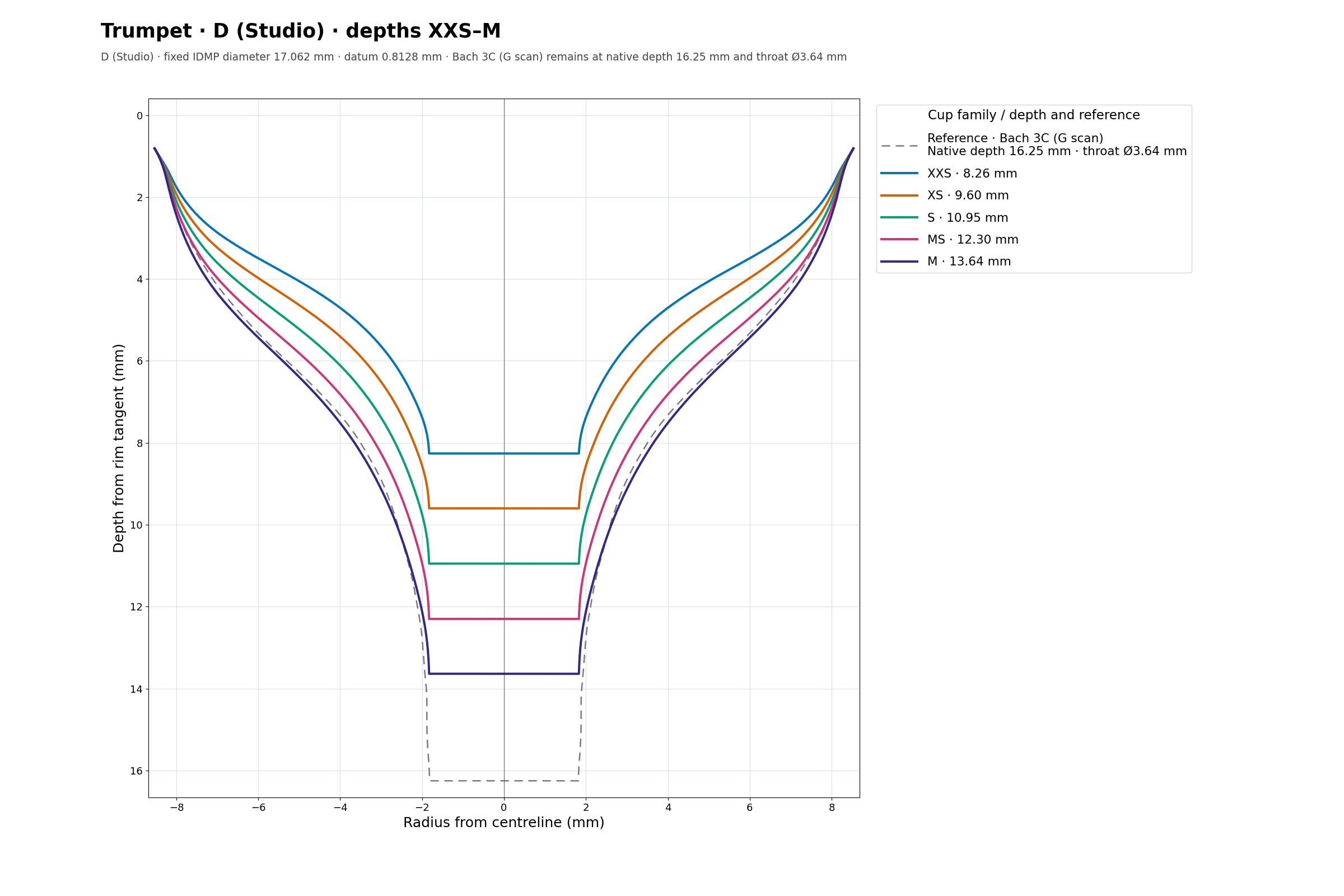
Engineered around the iconic Mount Vernon 3C cup architecture. Highly familiar rim and cup feel with refined intonation and slotting for versatile commercial and studio performance.
Configure Cup D →E · Lead
Convex Lead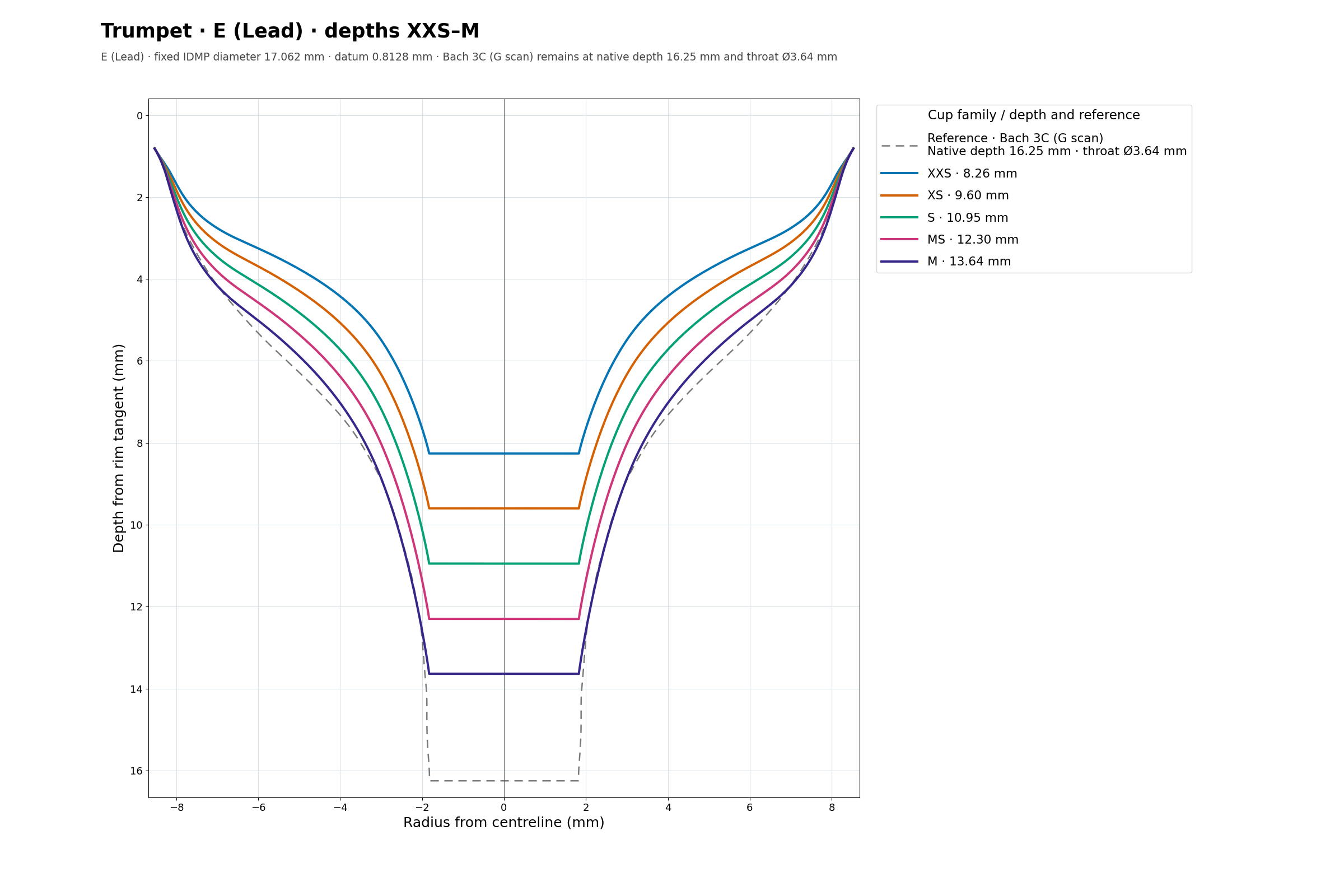
Generous lip room at the top coupled with a convex V-shaped lower cup and throat transition. Preserves significantly more lower-register body and harmonic depth than typical thin lead cups while delivering upper-octave sizzle.
Configure Cup E →F · Z-Cup
High Velocity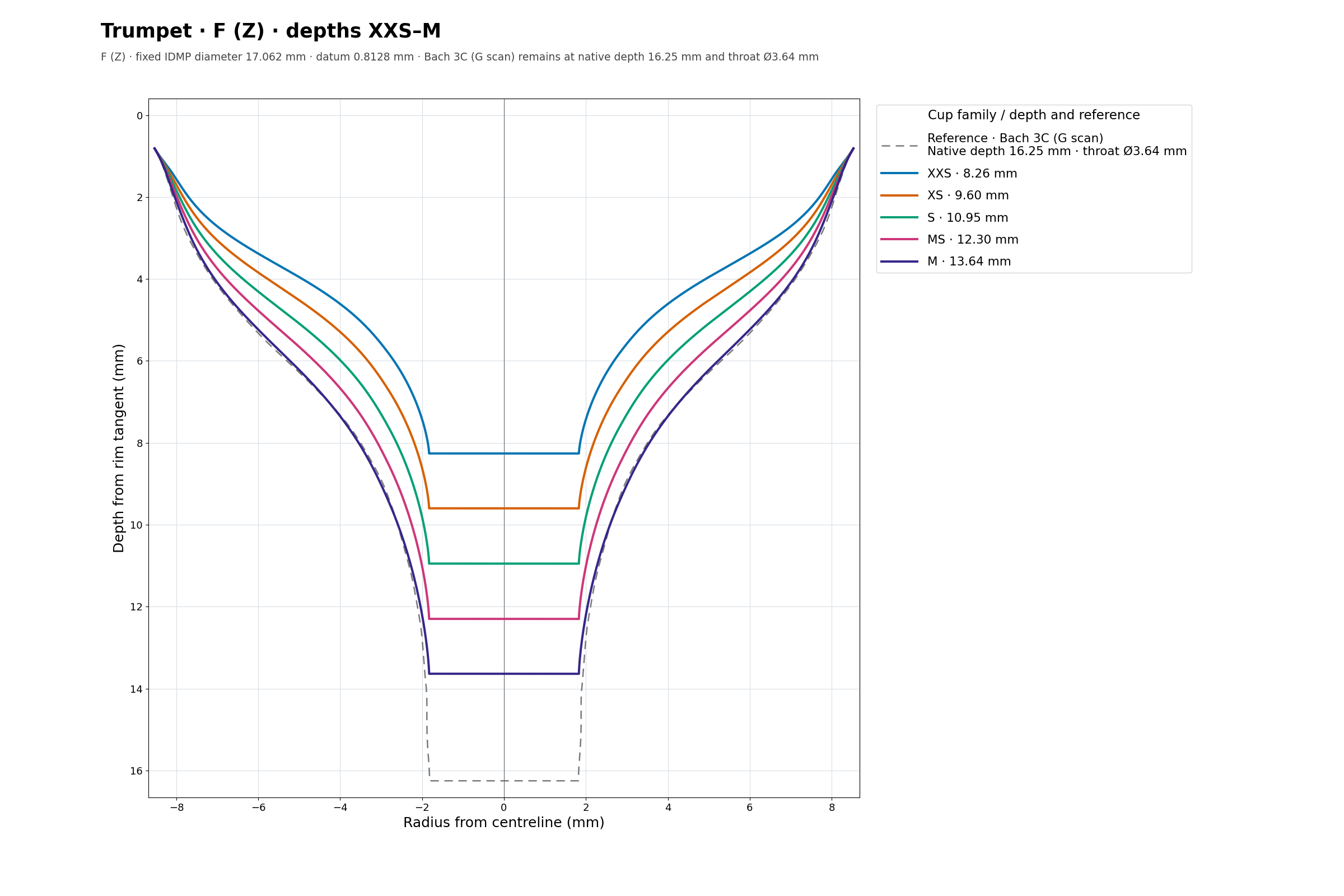
Provides added upper-wall support and reduces cup volume without choking airflow. Feels responsive, quick, and zippy with exciting sizzle when pushed. An accessible commercial switch for 1.5C or 3C players.
Configure Cup F →G · CL3
Supportive Classical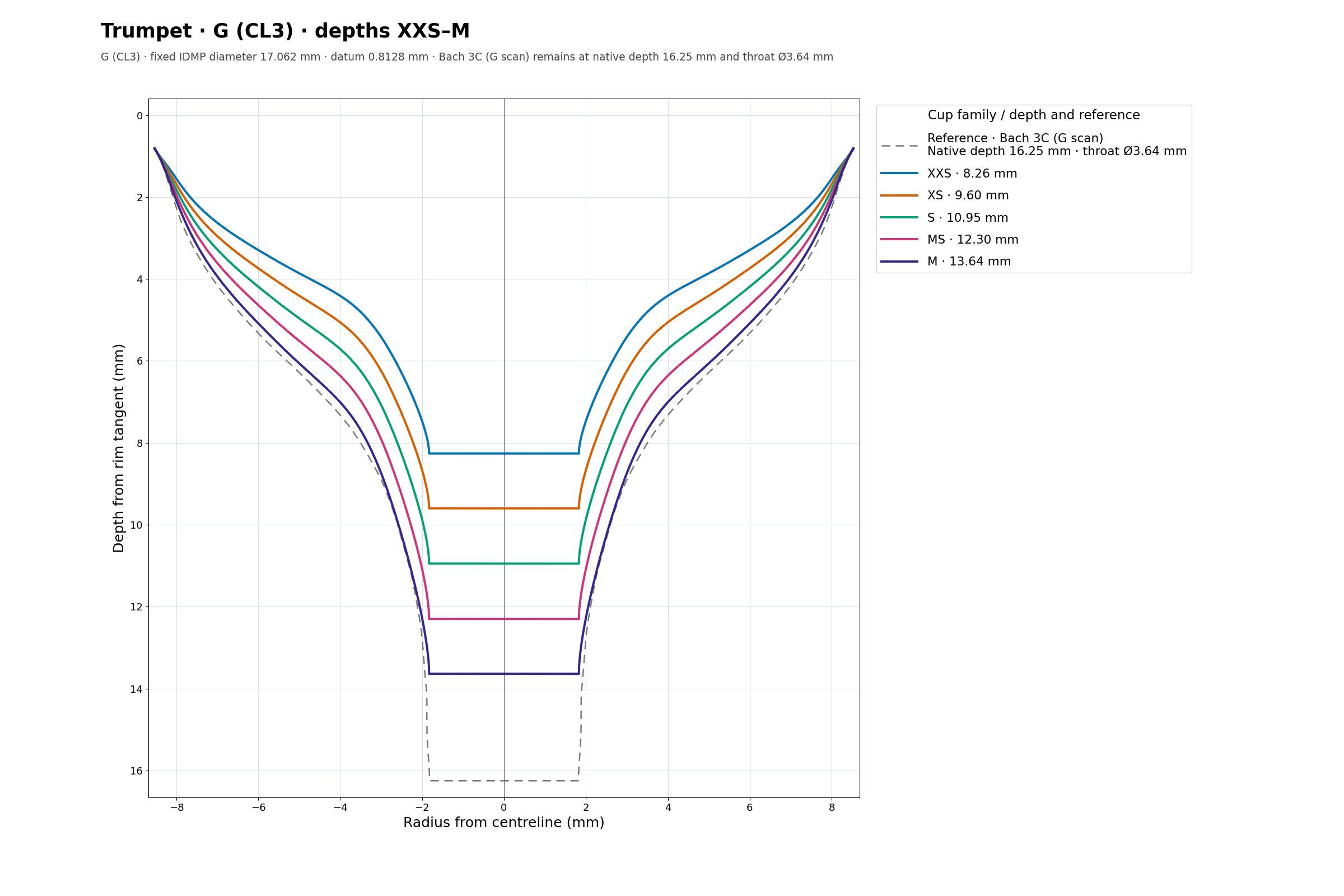
Higher alpha angle providing early lip support. Ideal for players who succeed on deeper V-cups like the Bach 1B or 3B, or players who naturally produce a very warm, rich tone and want additional front-edge bite.
Configure Cup G →H · Scream
High Alpha Compression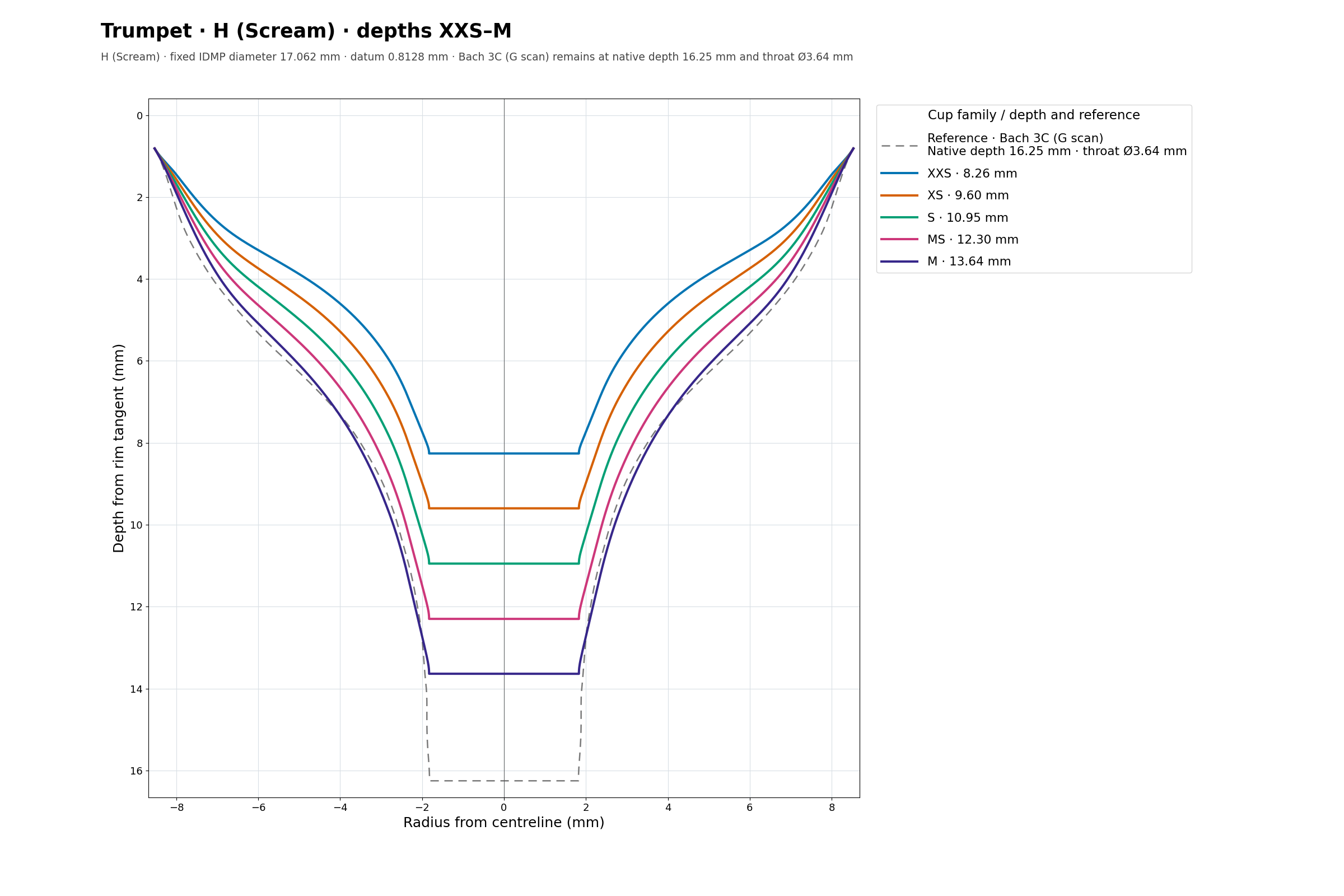
High alpha angle designed to maximize upper-register endurance and support. Forgiving entry profile reduces the harsh bottoming-out associated with standard extreme lead pieces while preserving an explosive sound.
Configure Cup H →I · V-Cup
Focusing V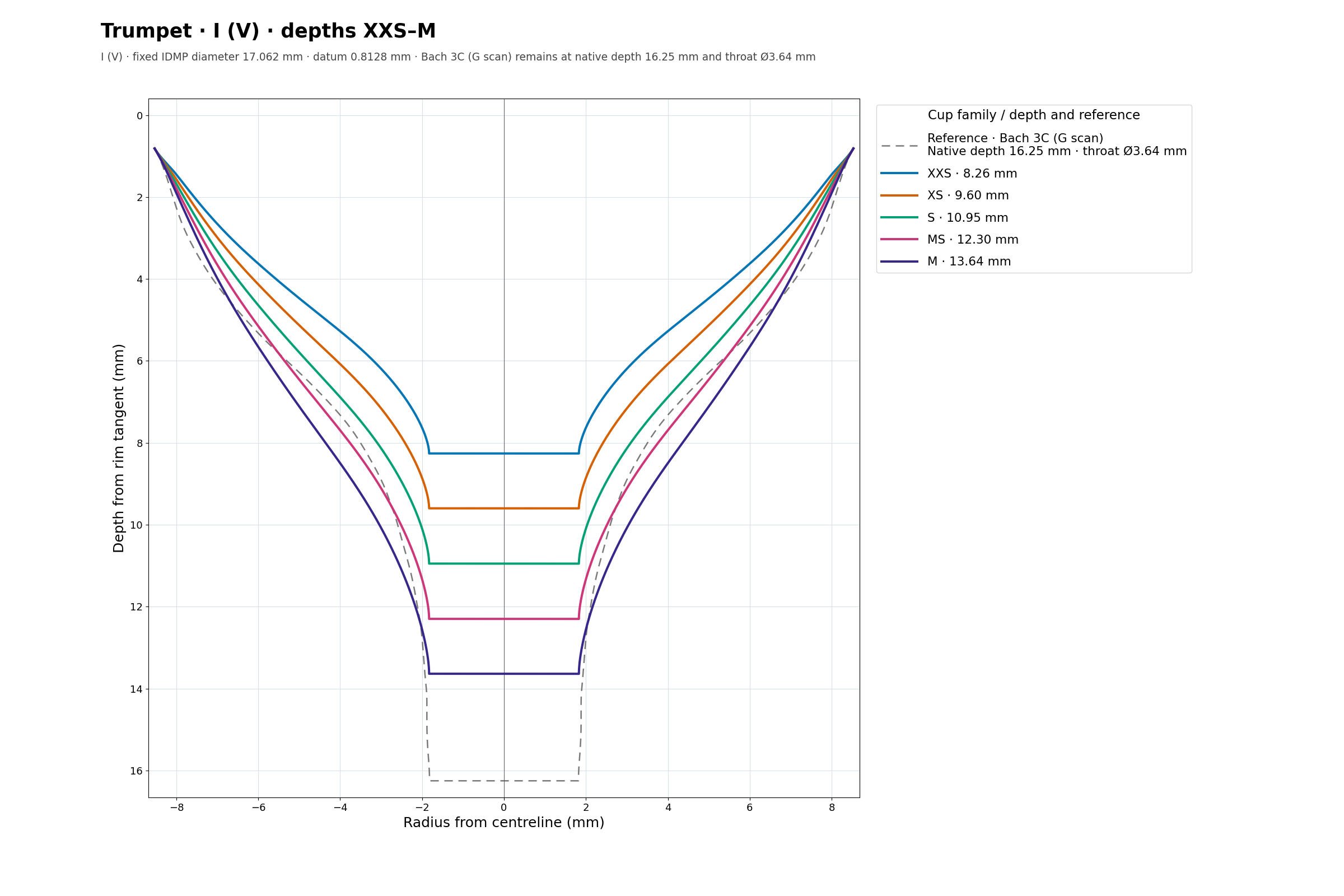
Aperture-focusing V architecture. As the player's lips intrude, the tapering walls assist in focusing the aperture, providing shocking ease in the upper register while maintaining a rich commercial voice.
Configure Cup I →J · MF1
Maynard Convex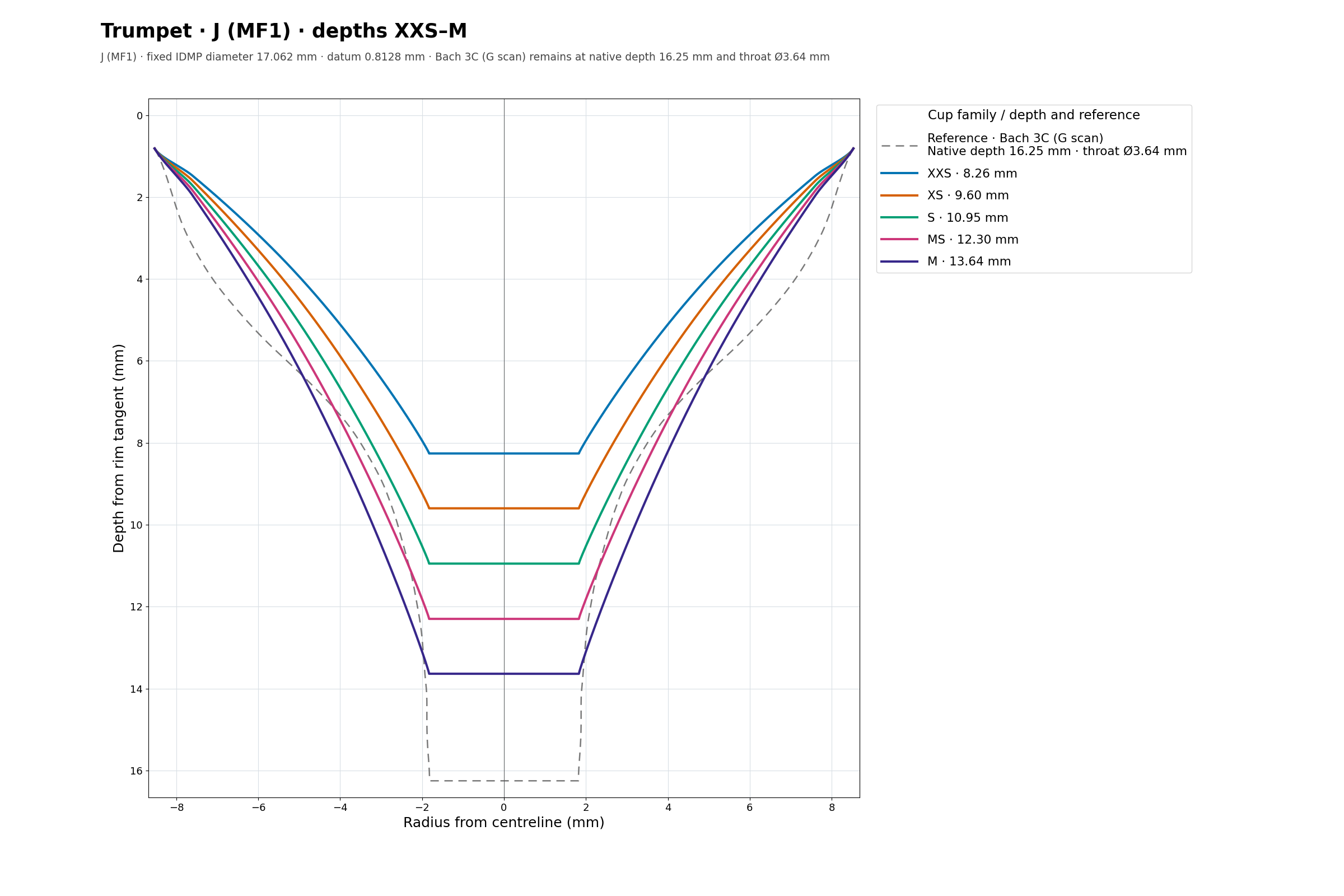
Convex curve inspired by Maynard Ferguson's custom high-velocity mouthpieces. Engineered with slightly more vertical upper walls to prevent puckering, making this blistering compression design exceptionally playable.
Configure Cup J →PT1 · Traditional
Lowest Entry Angle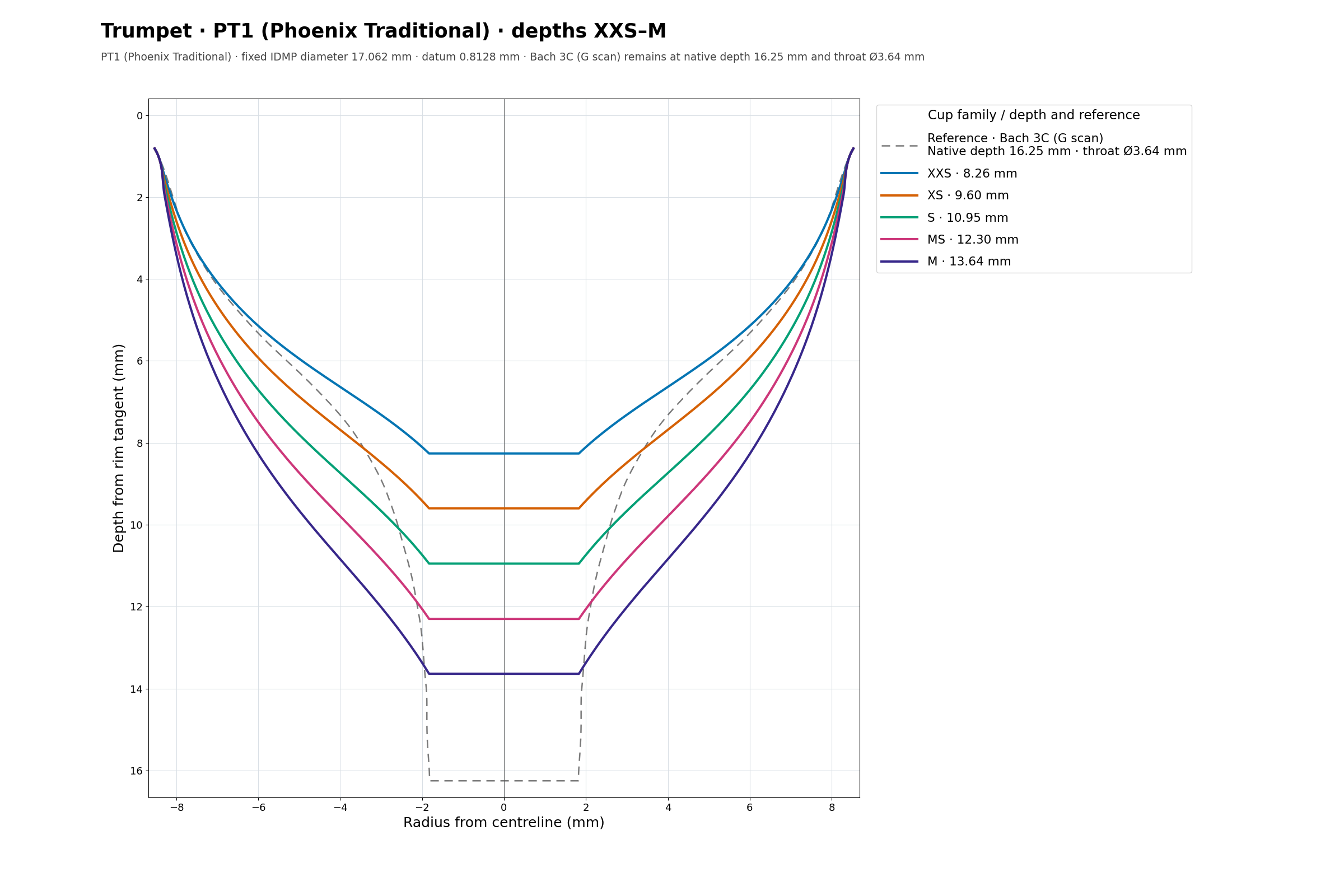
The lowest cup entry angle in the PT series. Averaged from thousands of scanned mouthpieces, PT1 features the most vertical upper wall, providing generous lip room and an open, free-blowing blow.
Configure PT1 →PT2 · Traditional
Moderately Low Angle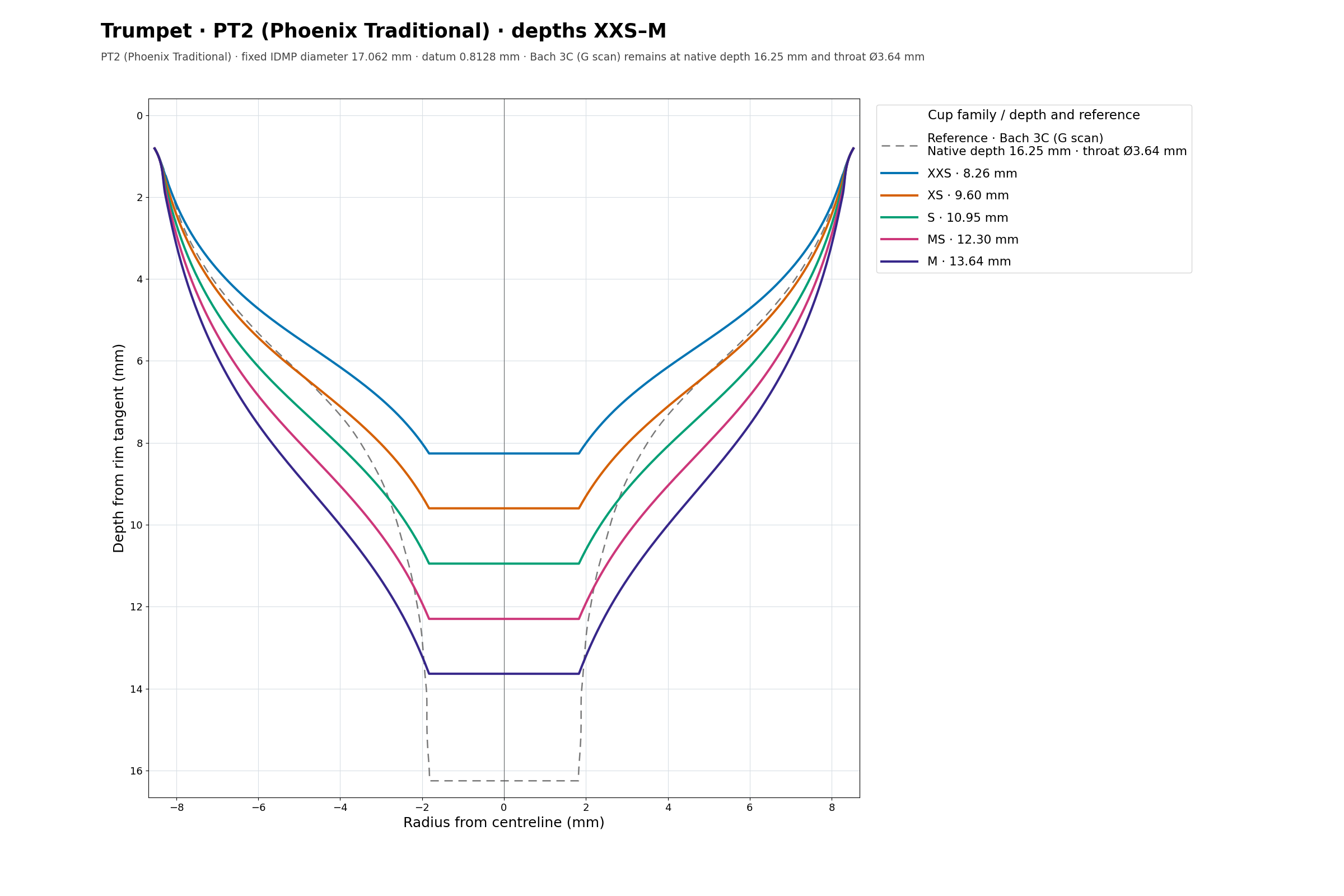
Moderately low cup entry angle. Offers a great balance of upper-wall lip freedom with smooth acoustic transitions into the throat, yielding centered harmonics and stable intonation.
Configure PT2 →PT3 · Traditional
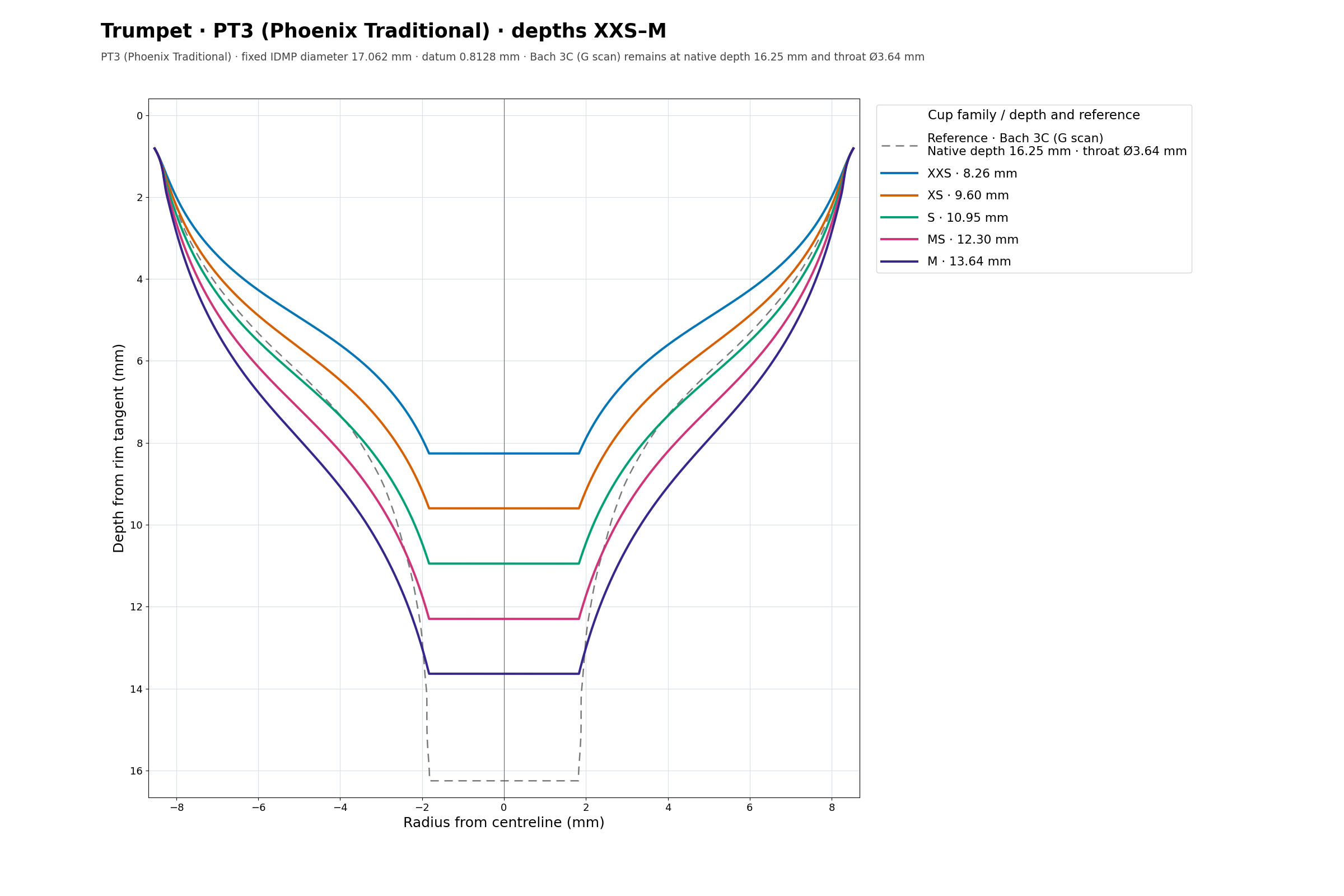
PT3 is the most common shape in the scanned mouthpiece profiles. That describes how often it occurs, not whether it is the right shape for your playing.
Configure PT3 →PT4 · Traditional
Moderately Steep Angle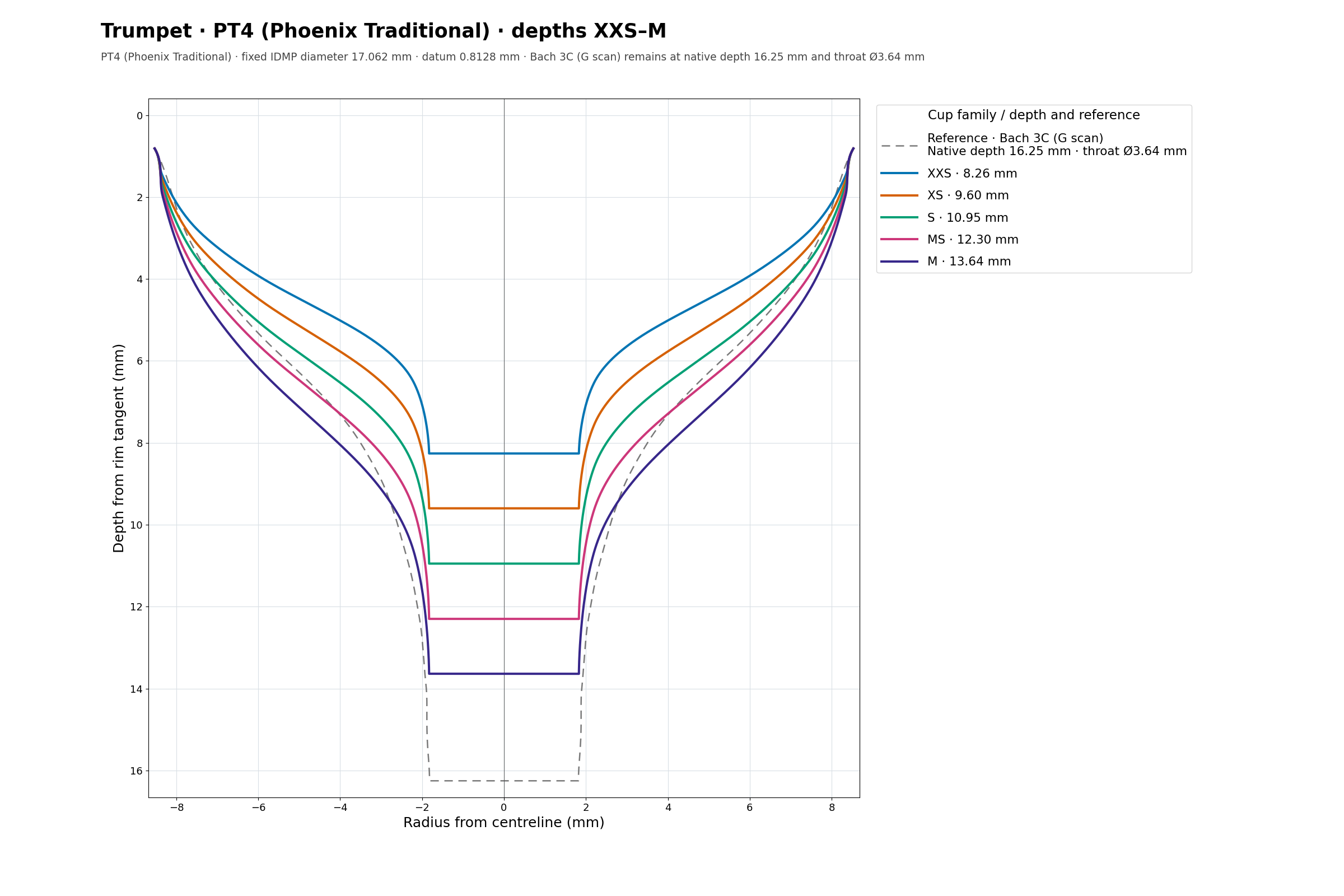
Moderately steep cup entry angle. Offers prompt lip support when fatigue sets in, while delivering a deep, velvety, traditional symphonic foundation with warmth and stability.
Configure PT4 →PT5 · Traditional
Steepest Entry Angle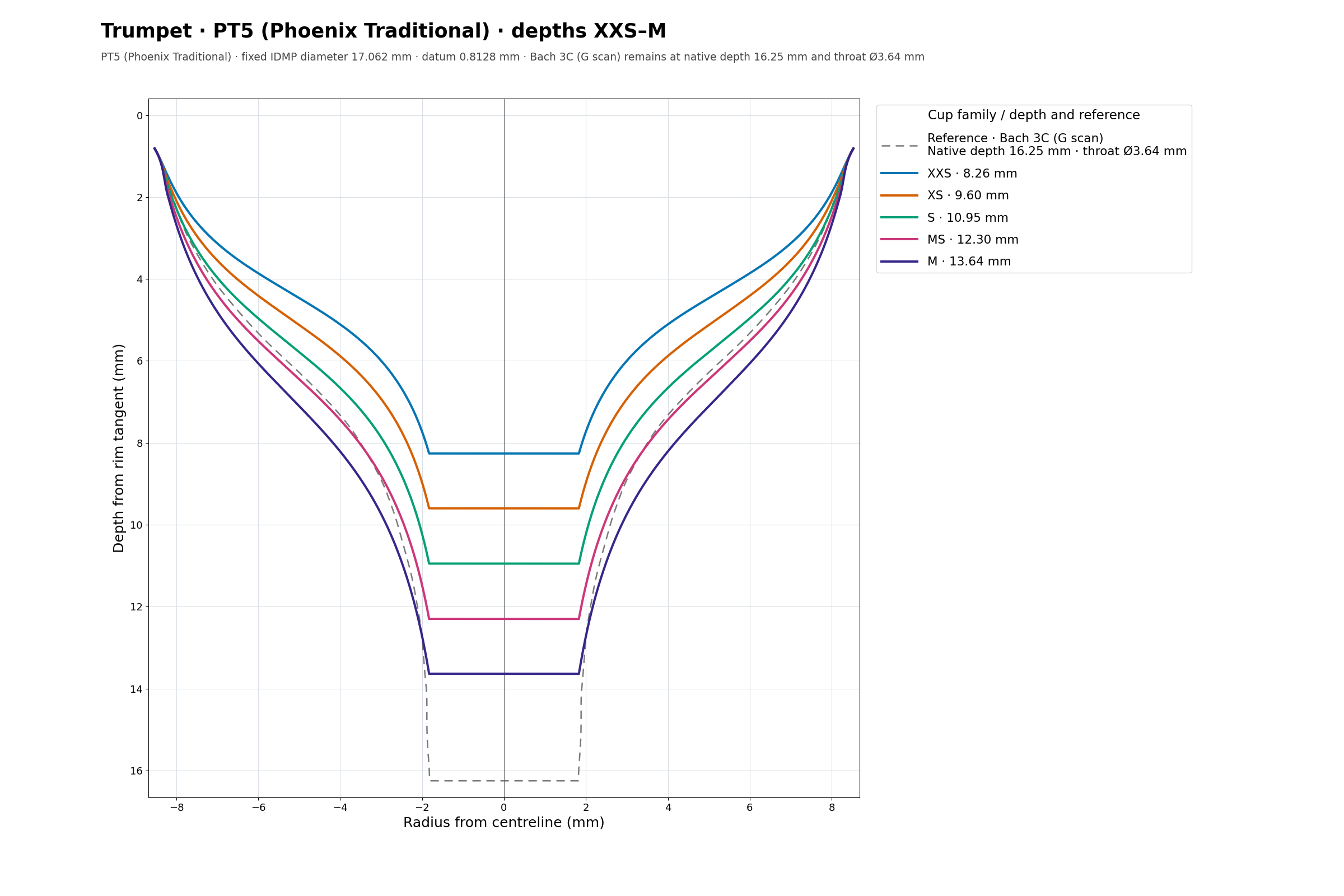
The steepest cup entry angle in the PT series. Maximizes front-of-cup lip support and compression, providing crisp note definition, clean attacks, and endurance support.
Configure PT5 →3. Understanding Diameters
We specify internal rim diameters using our numerical naming scale. Our sizes map to popular standard cup rim sizes as follows:
| Phoenix Size | Internal Diameter | Bach Equivalent | Schilke Equivalent | Best Suited For |
|---|---|---|---|---|
| Size 78 | 17.80 mm | Bach 1 | Schilke 20 | Symphonic players seeking maximum cup volume. |
| Size 76 | 17.60 mm | Bach 1-1/4C | Schilke 18 | Classical players seeking a rich, open sound. |
| Size 74 | 17.40 mm | Bach 1-1/2C | Schilke 15 | Orchestral/all-rounders wanting an expansive feel. |
| Size 72 | 17.20 mm | Bach 3C | Schilke 13 | Our most popular size; a balanced blend of comfort and support. |
| Size 70 | 17.00 mm | Bach 5C | Schilke 12 | Balanced standard; great compression and stability. |
| Size 68 | 16.80 mm | Bach 7C | Schilke 11 | Commercial/lead trumpet players seeking effortless compression. |
| Size 65 | 16.50 mm | Bach 11C | Schilke 9C4 / 6 | Ultra-high lead range and maximum endurance support. |
4. Materials & Finishes
Compare the materials below. Read where each part is made and who processes your order.
Resinite (Polymer)
Australian and other non-US orders are processed and made 100% by Chris in Melbourne. American orders are manufactured by Butch in the USA. Resinite is warm to the touch and budget-friendly for comparing designs.
Swirl Acrylic (Handcrafted)
Trumpet tops are now made by Chris in Melbourne. Turned and polished acrylic with standard Warburton threads. Immediate lip comfort, lively acoustic response, and unique visual swirl patterns.
Stainless Steel
Stainless steel tops and backbores will now be machined by Butch in the USA. Surgical-grade stainless steel. Maximum density and acoustic projection, hypoallergenic without plating, and lifelong resistance to corrosion.
TiN-Coated Brass
Acoustic brass core with Titanium Nitride gold coating. Familiar brass weight and projection with a scratch-resistant, hypoallergenic surface.
Silver-Plated Brass
Brass mouthpiece components finished with silver plating. Available in the configurator with the same pricing and six-week production lead time as TiN-coated brass.
| Material | Acoustic Character | Lip Feel & Temperature | Turnaround Time | Starting Price |
|---|---|---|---|---|
| Resinite | Warm, resonant, rapid feedback | Instant warm touch, soft rim grip | 5–7 days | $50–$60 AUD |
| Swirl Acrylic | Lively, resonant, bright acoustic center | Warm, ultra-smooth satin slip | 7–10 days | $119 AUD |
| Stainless Steel | Dense, focused projection & crisp slotting | Cool, smooth, completely non-reactive | 4 weeks | $119 AUD |
| TiN-Coated Brass | Traditional brass resonance & core power | Classic metallic feel, hard ceramic coat | 6 weeks | $119 AUD |
| Silver-Plated Brass | Traditional brass core with silver-plated finish | Silver-plated finish | 6 weeks | $119 AUD |
5. Backbores
Our modular mouthpiece system allows you to pair your optimal cup and rim with the perfect backbore to dial in your desired resistance, tone color, and projection.
#3 Backbore (Rotary Style)
Fat and wide. Very open blow, providing a massive, broad sound suitable for rotary trumpets or players wanting maximum air flow.
#5 Backbore (Orchestral Style)
An Orchestral style backbore that will feel comfortable and familiar to most players. A good sound spread, good projection, and designed to balance well with a medium-deep or deep orchestral style cup. Similar to backbores favoured by orchestral players.
#7 Backbore (Medium)
The perfect all-rounder. Medium resistance that balances well with most commercial and classical cups alike.
#9 Backbore (Medium Tight)
Medium-tight resistance offering extra support for extended upper-register playing without choking the sound.
Lead-M Backbore
Bergeron-style lead. Wide open lead sound for maximum volume and spread in a big band setting.
Lead-S Backbore
Tight, bright lead. Maximum resistance for extreme upper register compression and sizzling projection.